
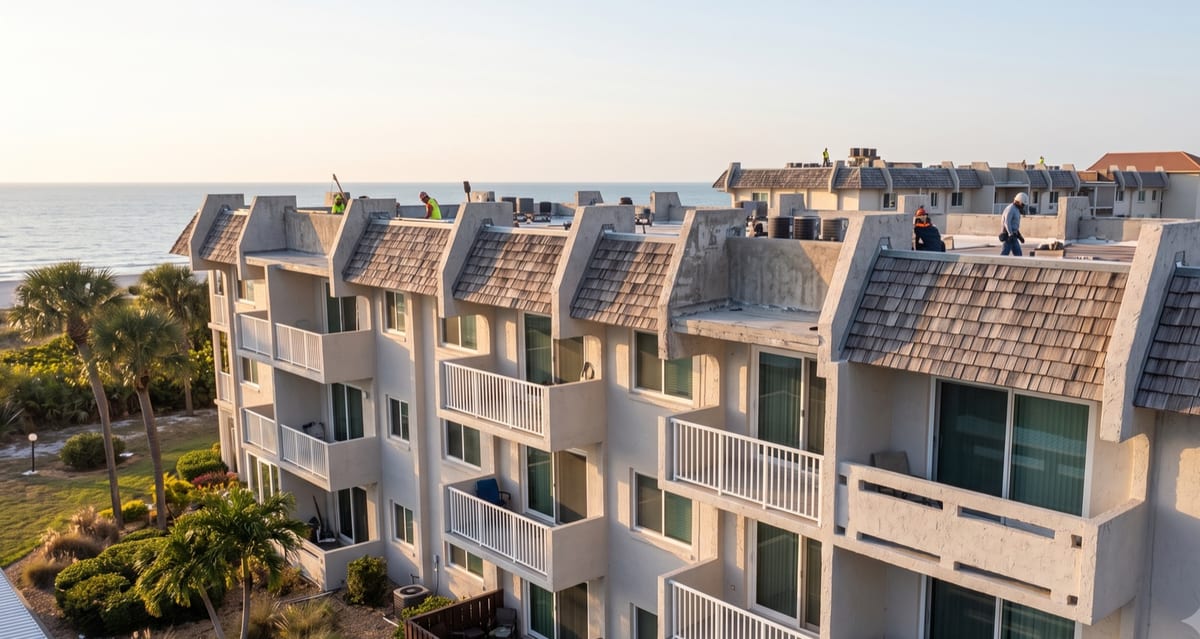
A 32-unit coastal condominium near Sarasota had aging roofs, balcony railings, and concrete repairs all coming due within five to seven years. The board was not worried. Their reserve study said the fund was in decent shape, so a special assessment was nowhere on the agenda. The study was several years old, and the gap between what it projected and what the building actually needed had quietly grown into a six-figure condo special assessment waiting to happen.
That is how these bills usually arrive. Not from a sudden failure, but from a slow one nobody was measuring. Here is what triggers a six-figure assessment, how that board found the gap in time, and the three-part framework any Florida condo board can copy. HOA boards operate under lighter statutory reserve rules, but the underlying math is the same.
What Actually Triggers a Six-Figure Special Assessment
A special assessment is a one-time charge a board levies on owners when the reserve fund cannot cover a required repair or capital project. It is not a penalty. It is the bill that comes due when a building's real needs outrun its funding plan.
Three forces push coastal condo special assessments into six-figure territory. Structural work is expensive by nature: roofs, balconies, and concrete restoration on a 30 to 55 year old building, with salt air accelerating all of it. Deferred maintenance compounds, because a repair postponed through five budget cycles does not stay the same size. Most common of all is an outdated reserve study, which quietly turns every year since it was written into an unmeasured liability.
The assessment is rarely caused by the repair itself. It is caused by the years of funding decisions made before anyone looked closely at the building.
One trigger sits outside the building entirely. Litigation is expensive, and a judgment, a settlement, or a defense that runs longer than anyone expected can outrun the association's directors and officers coverage and land as a special assessment. Fair housing complaints, covenant enforcement applied unevenly from one owner to the next, mishandled records requests, and election procedure are the usual sources. No reserve study forecasts any of them, which is why consistent governance is its own form of financial protection.
If your association has already voted on an assessment rather than trying to prevent one, the FAQ below on challenging one in Florida is the more useful section.
The Case: How One Sarasota-Area Board Avoided One
The 32-unit community never got the bill. During budget planning, Keys-Caldwell flagged the shortfall between the association's reserve contributions and the real cost of the roof, balcony, and concrete work coming in that five to seven year window. The board had not been ignoring the issue. They had an outdated reserve study telling them everything was fine.
From there the work was methodical rather than dramatic: update the reserve projections against the building's current condition, align the budget with Florida's Structural Integrity Reserve Study (SIRS) requirements, sequence the capital projects across several years instead of stacking them, and raise reserve contributions gradually.
Owners saw manageable annual increases instead of a sudden six-figure special assessment, and the board had years of warning instead of weeks. That outcome did not require an unusual budget or a sophisticated board. It required finding the gap early enough to spread it out.
The Three-Part Framework
The case above generalizes into three steps, and the order matters. Each one depends on the one before it.
1. Start With an Accurate Reserve Study
An outdated or never-completed reserve study is the single most common reason boards get blindsided. Only a minority of associations nationally work from a current one, so most boards are budgeting against a building that no longer exists.
A reserve study is not one product, and boards that treat it as an all-or-nothing expense usually end up with nothing. General studies run on a spectrum: a photo-based self-assessment reviewed by engineers, a full on-site engineered study, or a subscription with automatic annual updates. A SIRS is the exception, because its visual inspection has to be performed or verified by a licensed engineer or architect or a certified reserve specialist. Start with what a reserve study is and whether your condo needs one.
2. Align the Budget With Florida's SIRS Requirements
For condominium buildings three habitable stories or higher, SIRS is what stops the outdated-study problem from compounding into a crisis. It prices out a defined list of structural components (roof, primary structure, fireproofing and fire protection, plumbing, electrical, waterproofing and exterior painting, windows and exterior doors) and requires reserve funding to follow that assessment rather than whatever the board set aside last year.
SIRS turns structural reserve funding from a board preference into a statutory floor, which is why boards that treat it as a compliance chore miss what it protects them from. Owners can no longer simply vote those reserves down, though a 2025 amendment allows a limited pause tied to a recent milestone inspection. Florida Statute 718.112 sets the funding rules, and our full breakdown of Florida SIRS requirements covers deadlines, thresholds, and the pause conditions.
3. Phase Capital Projects Instead of Deferring Them
Deferring a known capital need does not save money. It converts a planned expense into an emergency one, and emergencies get billed as assessments.
Phasing turns a six-figure lump sum into a line item: a known scope, spread across several budget years, funded by gradual contribution increases instead of one vote. Doing it well takes real scoping and bid management, which is why Keys-Caldwell's Property Services division is led by a construction manager rather than a community manager doing double duty. Roofs get replaced on a schedule that lines up with the insurance renewal cycle, and the reserve plan and the project plan stay pointed at the same building.
Warning Signs Your Board Might Be Headed for One
The signs show up years before the bill does, and they are recognizable without any financial expertise. If more than two of these describe your association, you are likely closer to an assessment than your budget suggests.
- The reserve study is more than three years old, or nobody can say when the last one was done.
- The same deferred maintenance item gets pushed to "next year" at every budget meeting.
- The last insurance renewal came with an increase nobody could explain, particularly on an aging roof.
- A milestone inspection or SIRS deadline is approaching with no funding plan attached to it.
- Covenant enforcement gets applied unevenly from one owner to the next, or the board has never reviewed its process against fair housing requirements.
- Asked how healthy the reserve fund is, the honest answer around the table is a shrug.
If Your Board Thinks It's Already Behind
Being behind is common, and it is fixable more often than boards assume. The question is not whether a gap exists. On a 40-year-old coastal building, it usually does. The question is how many budget years are left to close it.
A gap found five years out gets absorbed through contribution increases; the same gap found six months out gets absorbed through a special assessment. So the first move is measurement, not a funding decision: a current read on the building's condition, real numbers on the projects coming due, then a decision about what can be phased. Boards rarely like the first number they see. They almost always prefer it to the alternative.
Frequently Asked Questions
What is a special assessment in a condo association?
A special assessment is a one-time charge levied on owners when the reserve fund cannot cover a required repair or capital project. It is separate from the regular monthly or quarterly assessment, which funds operations and scheduled reserve contributions. Special assessments are approved by board vote, sometimes an owner vote depending on your governing documents, and billed as a lump sum or over a set schedule.
Can I fight a special assessment in Florida?
Owners have narrow grounds to challenge a special assessment, usually procedural rather than financial: improper notice, a meeting that did not meet statutory requirements, or a vote that conflicts with the governing documents. Disagreeing with the amount is not typically a basis for challenge. Prevention works better, because a board with a current reserve study and a funded capital plan rarely has to propose one. This is general information, not legal advice; consult your association attorney about a specific dispute.
How do Florida's SIRS requirements affect special assessments?
SIRS requires condo associations with buildings three habitable stories or higher to fund reserves based on an actual structural assessment, which closes the exact gap that produces surprise assessments. Associations that underfunded structural reserves before SIRS often face a real adjustment to get compliant, but it is smaller and far more predictable than the bill that arrives when concrete restoration comes due against an empty reserve line.
How much can a special assessment cost?
Special assessments range from a few hundred dollars per unit for a small repair to tens of thousands per unit for major structural work on an aging coastal building. The six-figure number people repeat is usually the association-wide total, though on a small building carrying a large project it can land per unit as well. The size depends on how much of the work the reserve fund already covers, which is why the same roof replacement is a routine reserve draw at one association and the special assessment condo owners next door cannot absorb.
The Boards That Avoid These Are Not the Ones With Bigger Reserves
They are the ones who found out where they stood years before the bill came due. An accurate reserve study, a budget aligned with SIRS, and phased capital projects are not complicated ideas. They only work if the decisions get made early.
Keys-Caldwell has managed condominium associations in Sarasota County since 1978 and has been a Community Associations Institute Member Firm since 1985. Our reserve study and capital planning work exists for exactly this reason.