
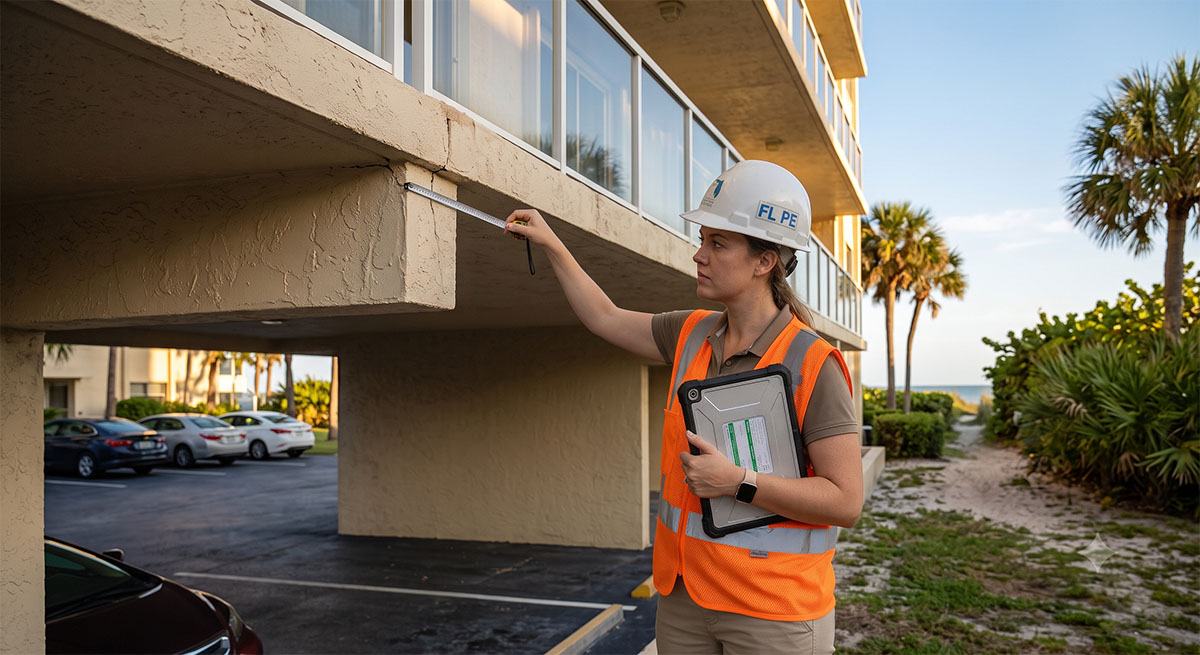
If your board has been told the building is due for a Florida milestone inspection, the first question is usually whether it is the same thing as a SIRS. It is not. A milestone inspection is a structural safety check of a condominium or cooperative building, separate from the reserve study that funds any repairs it finds. This guide covers it from the board's chair: which buildings are triggered and when, what the inspection involves, and what to do with the report. The rules bite hardest for older coastal buildings in Sarasota and Venice, where a local jurisdiction can move the clock forward.
What Is a Milestone Inspection?
A Florida milestone inspection is a structural check of a building's load-bearing and primary structural components: the foundation, structural framing, and load-bearing walls, along with elements like balconies where the inspector sees signs of structural distress. It is required under Florida Statute 553.899 and performed by a licensed engineer or architect, and its job is to attest to the building's life safety and general structural condition. It is not a building-code review, a firesafety review, or a cosmetic punch list.
The key point is that a milestone inspection is a condition assessment, not a funding plan. It tells your board what shape the building is in, not how to pay for repairs. That distinction, milestone versus SIRS, trips up more boards than anything else in the law. The milestone inspection is a statewide requirement, and it layers on top of local recertification programs, like the older 40-year recertification ordinances, rather than replacing them.
Which Buildings Need One, and When
The milestone inspection requirements Florida boards must meet turn on height and age. A Florida milestone inspection applies to condominium and cooperative buildings three or more habitable stories tall. If your community is a single-family or townhome HOA governed by Chapter 720, the requirement does not apply, though boards managing both a condo and an HOA often assume it does. Floors used only for parking, storage, or mechanical equipment generally do not count toward the three-story threshold, which the building official measures under the Florida Building Code.
On timing, the first inspection is due by December 31 of the year the building reaches 30 years old, measured from its original certificate of occupancy, and every 10 years after that. Two catch-up deadlines have already passed: buildings that turned 30 before July 2022 were due by the end of 2024, and those that turned 30 between then and the end of 2024 were due by the end of 2025. If your building is already past its 30-year mark, confirm you have not missed one.
Coastal boards in Sarasota and Venice have one extra thing to confirm: your local building department can require the first inspection at 25 years instead of 30. Florida law lets a local enforcement agency move the trigger forward when local circumstances, such as proximity to salt water, warrant it. It is not automatic and not tied to a fixed distance from the coast. It is a local decision, which is why a barrier-island building and an inland building of the same age can be on different clocks. Confirm your timeline with your building department rather than assuming the 30-year default.
Phase 1 and Phase 2: What the Inspection Involves
Most buildings only ever go through Phase 1 of a Florida milestone inspection, a visual examination by a licensed engineer or architect who walks the building and documents any signs of substantial structural deterioration. The clock is tighter than boards expect: once the local building department sends written notice that an inspection is due, Phase 1 must be completed within 180 days, and completed means the engineer has submitted the report to the building department, not merely finished the walk-through. If the inspector finds no signs of deterioration, that is the end of it until the next 10-year cycle.
Phase 2 is triggered only when Phase 1 turns up signs of substantial structural deterioration, and it is an investigation, not a verdict. It is a closer look, sometimes involving testing, to determine how far the deterioration extends and what repairs are needed. The phrase alarms boards more than it should. It does not mean the building is unsafe, and everyday surface cracks, sagging, or leakage stains do not count unless the inspector concludes they signal something structural. If Phase 2 is required, the engineer must file a progress report and timeline with the building department within 180 days of the Phase 1 report.
A Phase 2 report also starts a repair clock. The board must commence the identified structural repairs, not necessarily finish them, within 365 days of receiving the report, and sooner if the local ordinance sets a shorter window. If the board cannot show the building department that repairs are scheduled or underway, the department must review whether the building is safe to occupy. Cost for a Florida milestone inspection varies widely by building size, height, and condition, so budget for it as a professional engineering engagement, not a flat fee.
What Your Board Does With the Report
The Florida milestone inspection report is the start of your board's work, not a filing to close out. One duty comes even earlier: within 14 days of the building department's notice that an inspection is due, the board must tell owners and give them the completion deadline. Once the report is in hand, four steps matter.
- Distribute and record it, on the clock. Within 45 days of receiving the report, and regardless of what it found, mail or hand-deliver the inspector's summary to every owner, email it to owners who consented to electronic notice, and post the summary in a conspicuous spot on the property. Keep the full report in the official records, and publish the full report and summary on the association website if the association is required to have one.
- Read it with your management team and counsel. Sort what is urgent from what needs monitoring before making budget decisions.
- Fold the findings into the capital plan. Any repair the inspection identifies becomes a line in your reserve fund and capital plan. This is where a milestone inspection report stops being a document and becomes a budget.
- Sequence the work early. Boards that plan repairs across several budget cycles avoid the sudden six-figure special assessment that hits communities which wait.
A milestone inspection report is most valuable when the board uses it to plan years ahead rather than react.
Milestone Inspection vs. SIRS
Here is the distinction that matters most: one diagnoses, the other funds. The milestone inspection Florida requires assesses the building's physical condition. The structural integrity reserve study, or SIRS, is a separate study that sets the reserve funding schedule for the building's major structural components on its own cycle. They are companion requirements under Florida law, not the same report.
| Milestone inspection | SIRS | |
|---|---|---|
| What it does | Diagnoses the building's structural condition | Sets the reserve funding schedule for structural components |
| What it produces | A condition report from a licensed engineer or architect | A reserve funding schedule the board must budget to |
We keep the SIRS mechanics on their own page. For the funding side, see our guide to Florida SIRS requirements, and for how the rules fit together, start with our overview of florida condo compliance.
Frequently Asked Questions
What is a milestone inspection in Florida?
A milestone inspection in Florida is a structural safety inspection of a condominium or cooperative building's load-bearing and primary structural components, required by Florida Statute 553.899 and performed by a licensed engineer or architect. It assesses the building's condition on a schedule set by the building's age.
Which buildings need a milestone inspection?
Condominium and cooperative buildings three or more habitable stories tall, first triggered at 30 years of age, or 25 years where the local building department requires it. HOA communities under Chapter 720 are not subject.
What is the difference between a milestone inspection and a SIRS?
The milestone inspection assesses condition; the SIRS funds the fix. The structural integrity reserve study calculates how much the association must reserve for its structural components, so a building can pass the inspection and still have a SIRS funding gap.
What happens after a Phase 1 milestone inspection?
If Phase 1 finds no signs of substantial structural deterioration, the board distributes the inspector's summary within 45 days, keeps the full report in the official records, and plans for the next 10-year cycle. If Phase 1 does find such signs, a Phase 2 investigation follows, and once the board receives the Phase 2 report it generally must commence the identified repairs within 365 days, or sooner if the local ordinance requires.
Do HOAs need a milestone inspection in Florida?
No. The requirement covers condominium and cooperative buildings under Chapters 718 and 719, not homeowners associations under Chapter 720. Boards that manage both should not assume the two carry the same structural obligations.
Getting a Milestone Inspection Done Without the Scramble
The sequence for a Florida milestone inspection is simple to state and easy to underestimate: confirm whether your building is triggered and when, get the inspection done on time, and treat the report as a planning tool that feeds your budget. The hard part is the coordination.